
Hypobaric decompression and altitude exposure
Aircrew, chamber subjects and suited crew members work below sea-level pressure. OpenDeco gathers what the published record says about altitude decompression sickness, prebreathe and the transitions a cabin, a chamber or a suit imposes.
Diving decompression ends at sea-level pressure. Altitude decompression begins there and continues to lower pressures, and the exposure lasts as long as the cabin, chamber or suit holds its working pressure.
Pressure environments
Flight and cabin exposure
Transport aircraft hold cabin altitude at or below 8,000 feet, and most flights stay far below the altitudes where decompression symptoms are reported. Unpressurised flight, high-altitude operations and loss of cabin pressure move the exposure into the range where altitude decompression sickness is reported.
Hypobaric chambers
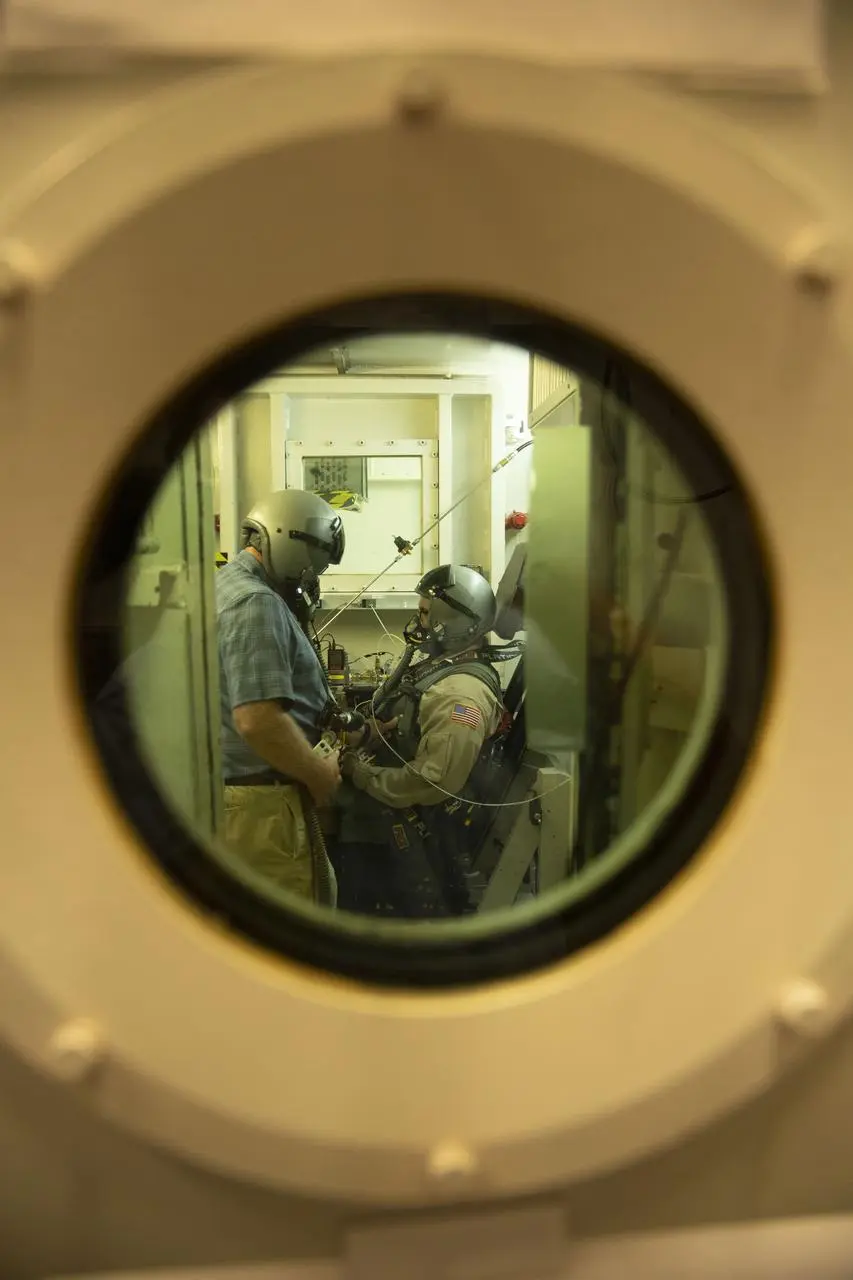
Altitude, hold time, breathing gas and workload are fixed by protocol, and subjects are observed throughout. Chamber work is the one aerospace setting that yields a controlled profile.
Suited operations and extravehicular activity
United States extravehicular suits run near 4.3 psi, close to 30 kPa, or under a third of sea-level pressure. Crew members breathe oxygen for a set period before the suit closes, then work at that pressure for hours.
Altitude and diving evidence
Altitude and diving decompression follow the same physics. Dissolved gas comes out of solution as ambient pressure falls. Before a model fitted to one can be tested against the other, both records have to state the same terms.
Terms both records have to state
- Reference pressure, stated explicitly: sea level, cabin, chamber or suit.
- Direction of the transition, its rate, and the breathing gas used during it.
- Prebreathe, where used: oxygen fraction, duration and workload during the period.
- Endpoint definition, including who observed the symptom and how long after ascent.